This is the question almost every roofing call turns into. Something's wrong, and you'd rather fix it than replace the whole thing, which is completely reasonable. Nobody replaces a roof for fun. But patching a roof that's finished costs money twice. Replacing a roof that has years left is money you didn't need to spend. Roof repair or replacement in New Jersey usually comes down to three things. How old the roof is, how spread out the damage is, and what's happening under the shingles. None of those require a specialist to think about, even if confirming them does. What follows is the same reasoning a roofer walks through on site. It won't replace an inspection, and it isn't meant to. It will tell you which questions actually matter, so you're not deciding based on a photo of one damaged shingle. Age, spread, and what sits under the shingles are the three that carry the most weight. They are worth understanding before anyone quotes you a number.
Start With the Age of the Roof
Age is the first filter because it sets the ceiling on everything else. An asphalt shingle roof that's a handful of years old and has one damaged section is a repair, full stop. A roof that's been up for decades is telling you something different. Losing granules, curling at the edges, and leaking in more than one place all point the same way. If you don't know the age, there are clues. Curled or cupped shingles, bald patches where the granules are gone. Shingles that crack when they flex all point to a roof near the end. Repairing a section of a roof like that is fine as a stopgap. You'd be buying time, and it's worth knowing that going in.
How Widespread Is the Damage?
One problem area with the rest of the roof in good shape is a repair. That covers a wind damaged section, a failed vent boot, flashing at a chimney, or a valley that's given up. Damage in several places at once is a different conversation. Say leaks show up on opposite ends of the house, or every inspection turns up another spot. Then the material itself is usually the issue rather than any single failure. There's also a middle case: one slope is beat up from sun exposure while the rest is fine. Sometimes that's a partial replacement. It isn't always the right answer, since matching shingles is its own problem. It's still worth asking about.
What's Under the Shingles Matters
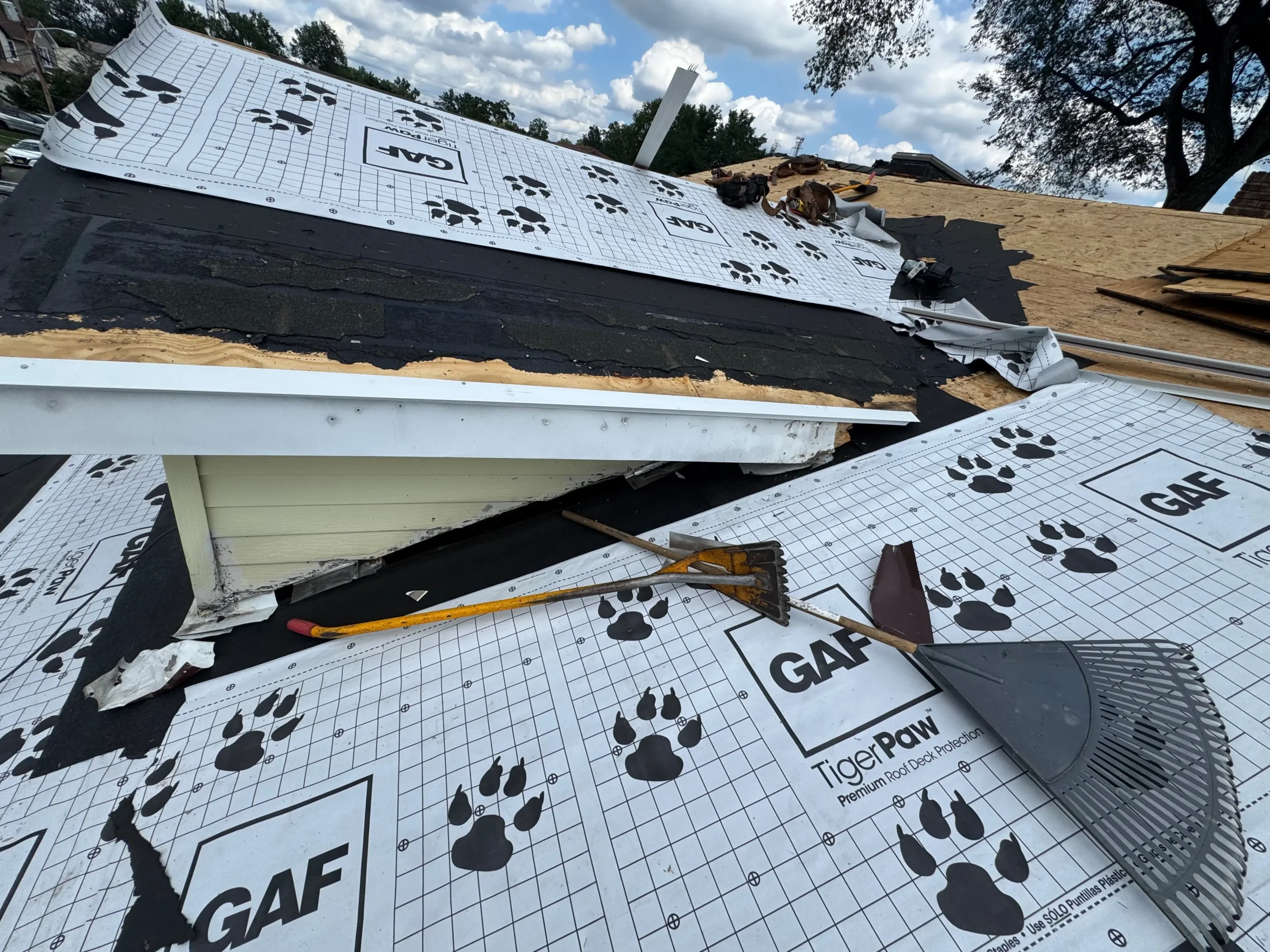
Two things get discovered when a roof comes apart. The first is how many layers are up there. A roof carrying more than one layer usually has to come off entirely, which changes the scope. The second is the condition of the decking. If water has been getting in for a while, the plywood underneath goes soft, and soft decking doesn't hold fasteners. You can't put a new roof over it and you can't reliably patch onto it. Neither of these is visible from the ground, and neither is anyone's fault. They're just why an estimate has to account for what might turn up once the old material is off.
Thinking About It Over Time, Not Just Today
A repair is cheaper today. That's real and it matters, especially if a replacement isn't in the budget this year. The thing to weigh is how many repairs are likely between now and the replacement you'll eventually do. Two or three patches on a roof that's already done add up. They can reach a meaningful share of the new roof. You still have the old roof. On the other hand, a roof with real life left in it is worth repairing every time. If you're planning to sell, that shifts the calculation too. What we'd avoid is deciding either way based on a single photo without anyone looking at the roof.