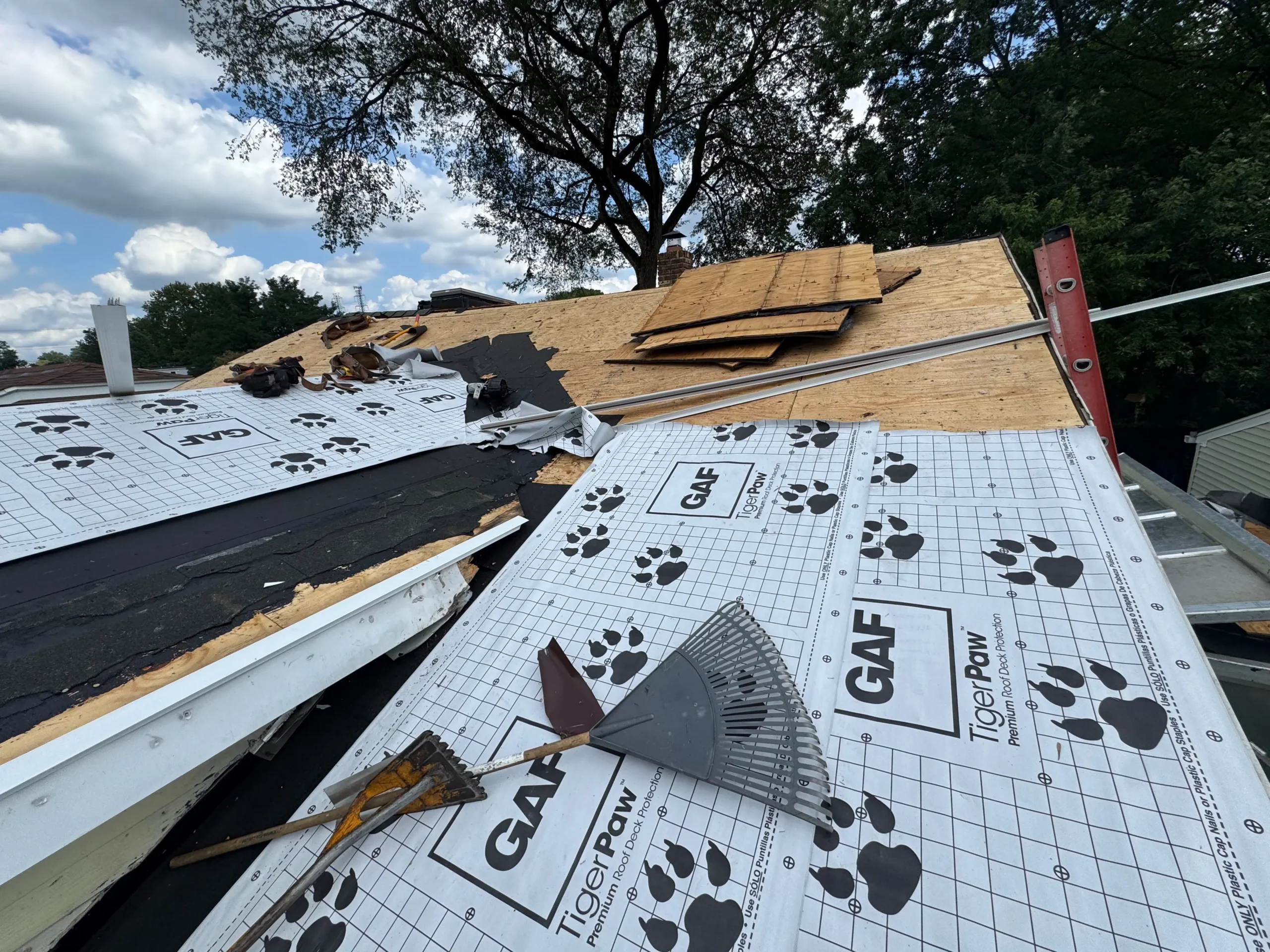
There's a common belief that roofs get replaced in the fall and that's that. It's half right. Fall is popular in New Jersey for good reasons. It's also the busiest stretch of the year, which has its own consequences. The honest answer is that every season has a trade off. That holds for the best time to replace a roof in New Jersey. The right one depends on how urgent your situation is. A roof actively leaking doesn't get to wait for ideal conditions. A roof that's aging but sound gives you the luxury of picking. Below is how each season actually behaves here, including winter, which people assume is impossible and isn't. Each one has something going for it and something working against it. Fall is the season everyone assumes is correct, and it is the one worth planning earliest. The goal is to help you plan rather than to sell you on a particular month.
Spring: Good Conditions, Post Winter Backlog
Spring is when winter damage surfaces. Ice dams have done their work, storms have lifted shingles, and the calls come in all at once. Temperatures moderate, which shingles like, and the ground firms up enough for staging and dumpsters. The trade off is that everyone else discovered their roof problem the same month you did, so the calendar fills. Rain is the other variable, and spring here brings plenty of it. Roofing work stops for weather, so a wet stretch pushes a schedule. Say your roof made it through winter but you know it's on borrowed time. Calling in early spring is a reasonable move, because you're ahead of the summer and fall crowd.
Summer: Long Days and Heat
Summer gives you the most workable daylight and the most predictable weather. That's genuinely useful on a larger roof. Asphalt shingles seal well in warm temperatures. The sealing strip does its job faster than it does in the cold. The downside is heat. Working on a dark roof in July is hard on people. Days often start early and end before the worst of the afternoon. Extreme heat can also make shingles more prone to scuffing while they're being handled. None of that makes summer a bad choice. It's a solid window, especially for a planned replacement you scheduled back in the spring.
Fall: The Busiest Window, and Why
Fall is the sweet spot on paper. Temperatures are in the range shingles like, humidity drops, and there's a natural deadline in the form of winter. Owners want the roof done before snow, which is sensible. The result is that fall books up, and the later in the season you call, the tighter the calendar gets. If your plan is a fall replacement, the time to line it up is late summer, not October. Leaves are the other factor. Gutters fill fast in this part of New Jersey. A lot of owners pair a roof with gutter work in the fall for exactly that reason.
Winter: Possible, but Weather Drives It
Roofs do get replaced in New Jersey winters, usually because the situation doesn't allow waiting. Cold weather roofing is real work with real considerations. Shingles are more brittle in the cold and have to be handled accordingly. The sealing strip may not fully bond until temperatures come up in the spring, which is normal and expected. Snow and ice have to be off the roof before anything starts, and a storm stops the job. What that means practically is a schedule that moves with the weather rather than a fixed date. If you've got an active leak in January, none of that is a reason to wait until April.